// Key takeaways
- AEM Champions Tad Reeves, Roman Mueller and Anian Weber met Munich-area AEM developers & architects, days after adaptTo() 2026 in Berlin
- A recap of the top talks and themes from adaptTo() 2026, the 15th edition of the longest-running AEM developer conference
- A "live architecture" session: what a chat-driven CMS like Experience Workspace needs before it can be trusted with production content
Munich AEM Meetup on 1 October 2026: adaptTo() 2026 Recap & Live-Architecting a Chat-Based CMS
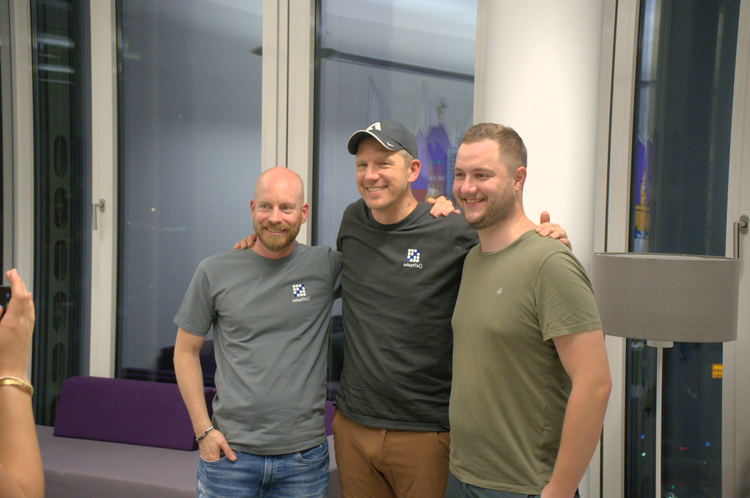
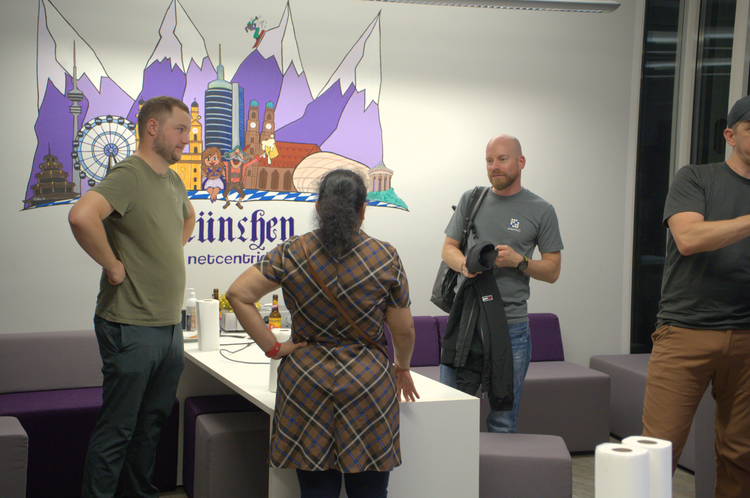
Following the adaptTo() 2026 conference in Berlin, AEM Champions Tad Reeves and Roman Mueller made their way to Munich to meet up with fellow AEM Champion Anian Weber and many other AEM developers & architects in the Munich area to continue the conversation.
The meetup, graciously hosted by our friends at Netcentric (thank you Georg!), was in Munich Central Tower: a location with a lovely, panoramic view of Munich, including an absolutely PACKED Oktoberfest just a short walk away.
We discussed our top talks and themes from adaptTo() (the longest-running AEM developer conference, which just celebrated its 15th year), then moved to a "live architecture" session on the best way to structure an agentic chat interface for a content management system.

Meetup Sessions
https://www.youtube.com/watch?v=w3SP1qOsd0o
Chapters:
- 0:00 Introduction
- 4:00 Recap of adaptTo() 2026 from Roman Mueller
- 15:18 Discussing the top AEM & Adobe innovations from adaptTo() 2026
- 38:45 Live-architecting the Experience Workspace chat UI
Recap of adaptTo() 2026
Roman Mueller opened with a recap of adaptTo() 2026 (Berlin, 28–30 September), and the room then dug into the top AEM & Adobe innovations from the conference.
Live Architecture: What Should a Chat-Based CMS Look Like?
At adaptTo(), Natalia Venditto & Sharanya Vinod gave a great talk, Spellforge to Experience Workspace, on how to approach conversational authoring with Adobe's CX Enterprise Coworker. But a chat box isn't the only part of the UI to think with. What elements would an ideal CMS UI have, where you could make possibly-sweeping conversational changes to critical production content?
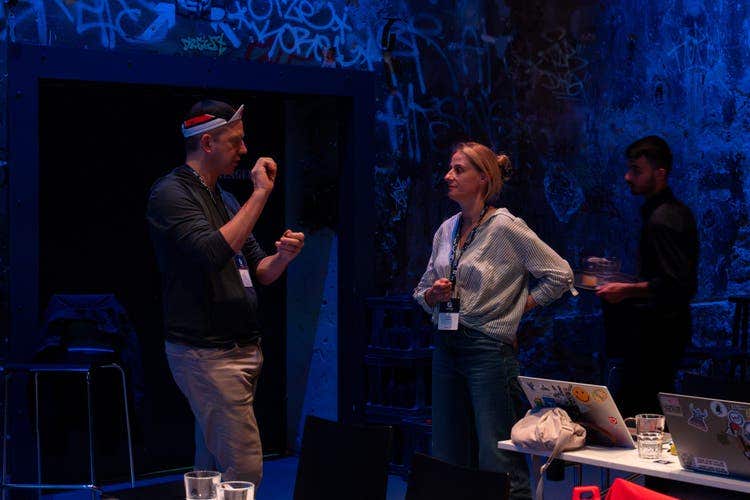
As an ad-hoc technical dream team (and what a project team the all-stars in that room would make!), we kicked around exactly that: live-architecting what a chat-driven Experience Workspace would actually need to be usable without turning the content tree into cat food.
The current Experience Workspace demo chat harness is just a box in the lower-left corner that can talk to the DA MCP (and friends), and it's already enough to make customers nervous. It can modify documents, add blocks, publish, touch indexes, or delete things based on a prompt, and the blast radius is "the entire set of permissions the MCP has" rather than what a sensible author would ever click.
So what SHOULD the UI have? What are the problems, and how might they be solved?
Here's what we live-discussed, and the questions still floating around (ones we really hope CERTAIN FRIENDS AT ADOBE have a look at):
- How do you actually surface the blast radius of a conversational change so an author can see (and reject) it before anything is published? Is a simple page preview enough, or do you need a full visual/structural diff plus a list of every side effect (index updates, metadata, related pages, assets)?
- Can you trust the preview? Several of us pointed out that an agent can forget to mention (or show) some of the changes it made. How do you guarantee the preview matches what will actually ship?
- Edge Delivery already has snapshots and reviews (thank you Chris Millar). Should every agentic edit land in a temporary snapshot (the content equivalent of a git worktree) that requires an explicit "merge" or approval step? THAT might be cool (Natalia!!??)
- Who stays responsible? Everyone agreed the human whose name is on the publish action remains accountable, but how do you make that feel real in the UI so people don't just click through?
- Multi-agent validation gates: one agent for brand voice/language, another for theming/compliance, another for performance/accessibility, plus a human at the end. How much of that is automatic vs. configurable per site or per role?
- The concurrent authors problem: five people prompting "find every document that says X and change it" against the same folder. How do you detect and resolve collisions before they become production incidents?
- Role and skill scoping: the person whose only job is updating webinar dates shouldn't be able to rewrite the corporate homepage via chat. How do you encode that in the UI and in the available skills?
- Custom skills as the real differentiator: authors (or their teams) will want to import or author their own campaign/workflow skills. How do you make that safe and reviewable without turning skills into another ungoverned prompt library?
- Translations: people will absolutely type "Yo clanker, give me this same page in Polish" into the chat and skip the translation vendor/workflow. Does the UI need explicit hooks for translation memory, glossaries and review, or do you just accept that some of this will bypass traditional processes?
- Regulated industries (insurance, finance, etc.) that must retain every version of a page for years. How do conversational edits fit into existing snapshot/audit requirements without making the happy path unusable?
- Evaluation of the output itself: we spent a lot of time on process and very little on how you systematically judge whether the generated content is actually any good (tone, accuracy, completeness). Is that a skill, a separate review agent, or still mostly human judgment?
- The demo chat still forgets multi-step tasks and needs constant reminders. How much of the "ideal UI" is really just better orchestration and state management underneath the box, versus new visual chrome?
Some of these feel reasonably thought-through already; others are still open questions we were throwing around over pizza. The through-line: a bare chat box is not the product. The product is the combination of chat + constrained skills + visible, reviewable, human-gated change.
Session Resources
The talks, products and docs that came up during the meetup, for anyone who wants to dig further.
adaptTo() 2026
- adaptTo() 2026, Berlin, 28–30 September: the conference site, with the full schedule and every talk
- Natalia Venditto & Sharanya Vinod, Spellforge to Experience Workspace: Building a Skill-Driven Agent System for DA/AEM (watch the recording), the talk that kicked off our live-architecture session
- Tad Reeves & Laurel Timko, Spiritually-Succeeding AEM: Advanced Author Customization in DA
CX Enterprise Coworker
- Adobe unveils CX Enterprise Coworker (Adobe newsroom, April 2026)
- Coworker Chat overview (Experience League)
- The Experience Workspace assistant panel: the chat box itself, Experience Workspace's natural-language interface to Coworker
Experience Workspace
- Tad Reeves, Introducing Adobe Experience Workspace, at the DC-area AEM GDC meetup, 27 August 2026 (watch the talk)
- Document Authoring is now Experience Workspace
- Experience Workspace MCP: the MCP server the chat box talks to
From the live-architecture session
- Reviewable, human-gated change: Snapshots and Reviews and Snapshots in Experience Workspace, plus git worktree, the developer-side analogy
- Approval before anything ships: Request Publish
- Validation gates: Preflight, which runs the Governance Agent over a document before preview or publish
- Role and skill scoping: Permissions and security, and AEM agentic plugins, where the assistant's skills are switched on one site at a time
- Translations: Translation in Experience Workspace
- Regulated retention: Versioning and history